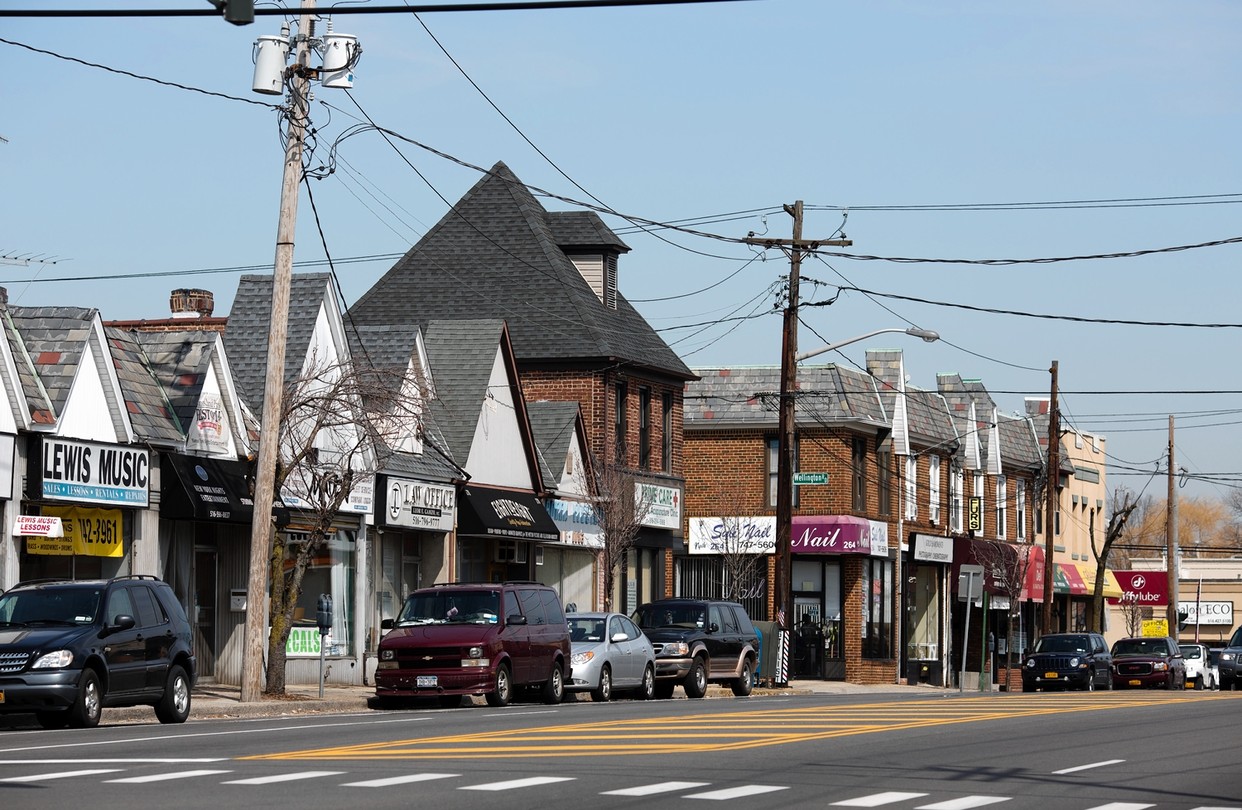
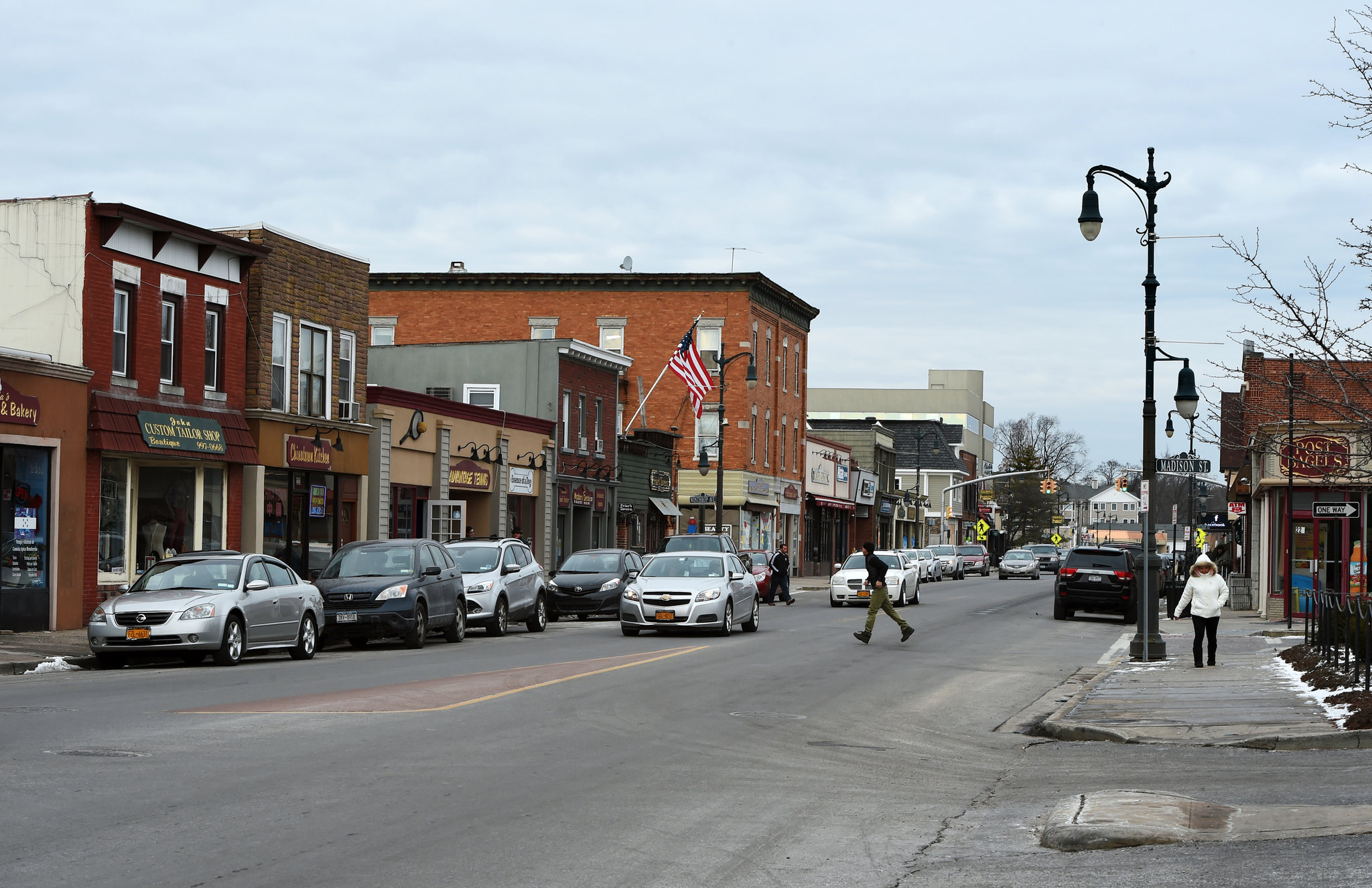
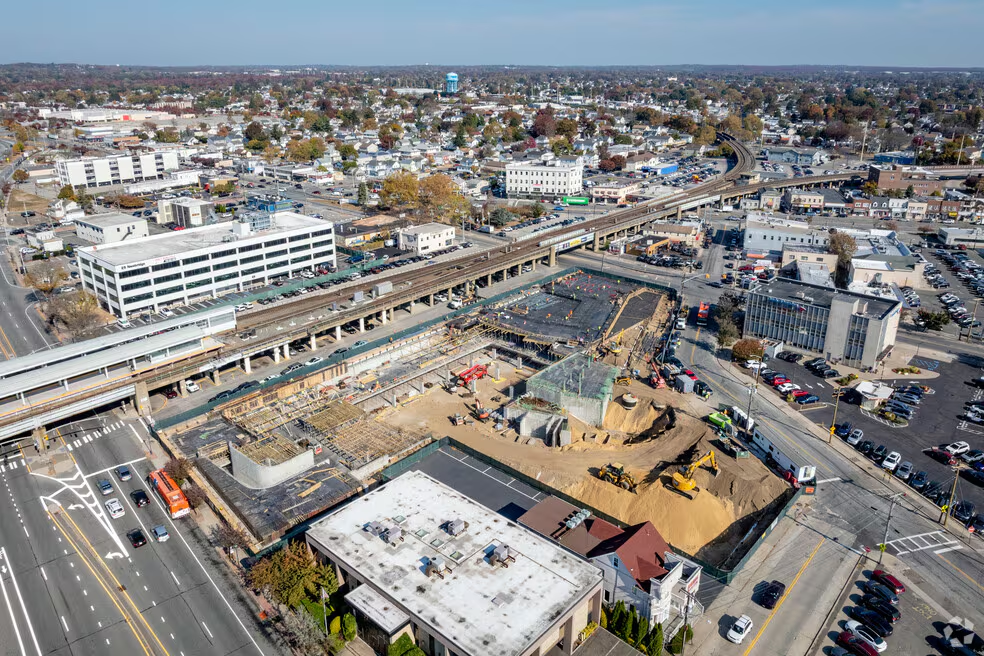
Hempstead is the largest township in New York State, but the Village of Hempstead itself is a dense, diverse downtown centered on Fulton Avenue and Main Street. Most 1031 activity here involves multifamily and mixed-use retail rather than office or industrial property, and that's the frame worth keeping in mind before you start comparing candidates.
A Dense Downtown Market
The village's older housing stock supports a steady multifamily replacement market, walk-up apartment buildings and small mixed-use properties with ground-floor retail, concentrated within a short walk of the LIRR's Hempstead branch terminus. Fulton Avenue and Main Street carry the retail corridor, much of it in older storefronts serving a working-class customer base with steady, if modest, sales volume.
Hofstra University and the arena development activity around Uniondale, part of the broader Town of Hempstead, add some institutional and event-driven demand nearby, though that's a different submarket from the village's retail and residential core and shouldn't be assumed to lift village pricing directly.
Fulton Avenue's retail base leans toward everyday goods and services, groceries, phone stores, check-cashing storefronts, barbershops, rather than the destination dining or boutique retail found in some North Shore villages, and any income underwriting should reflect that steadier, lower-margin tenant mix rather than assume upside from a changing customer base.
Nassau Community College and the county courthouse complex, both nearby in the broader township, generate some daytime foot traffic for village businesses, but that traffic is concentrated on weekdays and doesn't carry the same weight in an income analysis as a residential customer base that shops seven days a week.
What Trades in Hempstead
Replacement candidates in the village generally fall into a few categories:
- walk-up multifamily buildings
- mixed-use retail with apartments above
- small storefront retail on Fulton Avenue or Main Street
- service commercial near the LIRR terminus
- institutional-adjacent office near the university corridor
Identification and Documentation
Hempstead multifamily deals move at a normal pace once rent rolls and certificates of occupancy are in order, but older buildings in the village sometimes have permit history that takes longer to document than the property records themselves. Request that history the same week you list your property for sale, not after you're inside the 45-day window and racing the calendar.
The three-property rule fits most Hempstead exchanges we've coordinated, since owners are typically comparing one village multifamily candidate against one or two alternatives in Uniondale or a neighboring Nassau County town rather than assembling a long identified list.
Coordination Notes
A qualified intermediary handling a Hempstead exchange should already be comfortable with older certificate-of-occupancy records and municipal violation searches, since those searches are a routine part of underwriting property in this part of Nassau County and can surface open items that need to be cleared before closing.
Underwriting Older Multifamily Stock
Walk-up buildings in the village core were mostly built well before current code, so a replacement search here has to budget time for a certificate-of-occupancy reconciliation against the actual unit count and configuration, beyond a simple review of the current rent roll.
It's common to find a building where the unit count on the rent roll doesn't quite match the certificate of occupancy, sometimes because a basement or attic space was converted informally years ago. That mismatch doesn't automatically disqualify a property from an exchange, but it does need to be resolved before a lender will commit to final terms.
Resolving it usually means either a legalization filing with the village building department or adjusting the rent roll to match the legal unit count, and either path takes longer than most owners expect, so raise the question the moment you spot a discrepancy rather than waiting for the lender to find it.
Lenders financing this kind of building will ask the same questions a careful buyer would: is every unit legally configured, is there any open violation, and does the rent roll match what the certificate of occupancy actually permits. Getting ahead of those questions saves real time later in the exchange.
Common 1031 Exchange Questions
Why does Hempstead's housing stock affect exchange documentation?
Older buildings sometimes carry permit or violation history that takes extra time to clear, so we recommend ordering municipal searches before your 45-day window starts rather than waiting until a lender asks, since these searches can take weeks to come back.
Is retail or multifamily more common as a Hempstead replacement property?
Multifamily and mixed-use with ground-floor retail are more common than standalone office or industrial space in the village itself, reflecting the density of the surrounding housing stock and its working-class tenant base.
How does the arena development near Uniondale affect Hempstead property values?
It's a separate submarket within the broader township, and its effect on village-level retail and multifamily pricing has been limited so far based on what we've seen in recent exchanges we've coordinated in the area.
Should you expect a long identified list for a Hempstead exchange?
Usually not. Most Hempstead exchanges we've coordinated use the three-property rule, comparing one village candidate against one or two nearby alternatives in Uniondale or elsewhere in Nassau County entirely.
What should you request first when considering a Hempstead multifamily replacement?
Current rent roll, certificate of occupancy, and a municipal violation search, in that order, before you're deep into your identification window and running short on time to clear any open items.