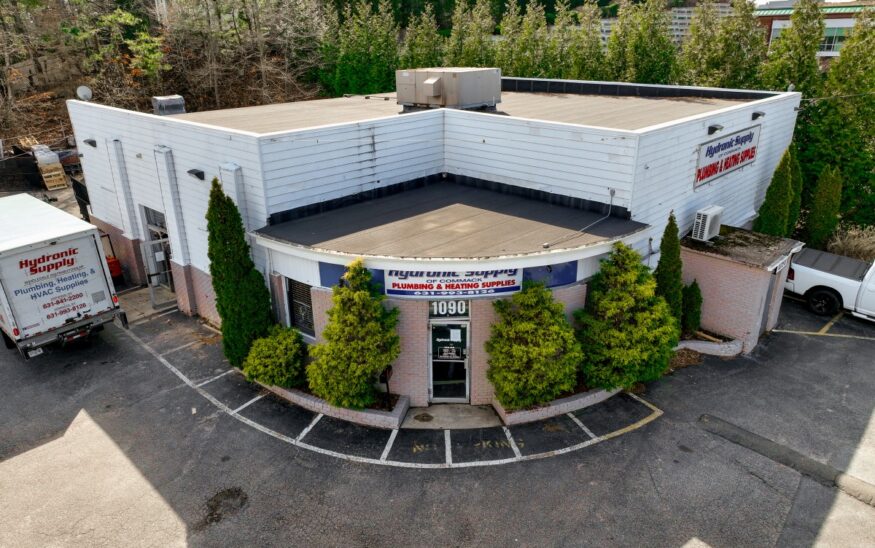
Hauppauge sits on one of the largest industrial parks in the Northeast, and that changes the whole conversation about what a 1031 exchange looks like here. Most replacement property in Hauppauge is flex, warehouse, or office space, not retail or multifamily, and the underwriting reflects that from the start.
An Industrial Park Market
The Hauppauge Industrial Park sits off the Long Island Expressway at exit 56, along Vanderbilt Motor Parkway and Veterans Memorial Highway, and holds a mix of light manufacturing, warehouse, and flex buildings leased to single tenants or small multi-tenant groups. Suffolk County's own administrative offices sit nearby, which keeps some office demand steady independent of the industrial cycle.
Because so much of the park was built out decades ago, older buildings often need roof, loading dock, or HVAC updates that show up in due diligence. That's a normal part of underwriting an industrial replacement property here, not a red flag on its own, but it does affect how quickly a lender will move.
Motor Parkway itself has a longer history than most of the buildings that now line it, having started life as one of the first roads built specifically for automobiles, and the corridor has been fully absorbed into the industrial park's day-to-day traffic pattern for decades now.
Truck access is worth checking block by block. Some interior streets in the park were laid out before dock-high trailers were common, and a building with a great lease and a tight turning radius for delivery trucks can still be a poor fit for a logistics tenant looking to expand.
Replacement Property Types
A Hauppauge exchange file typically includes:
- single-tenant flex and light manufacturing buildings
- multi-tenant warehouse space
- professional office near the county government buildings
- distribution space with dock-high loading
- older industrial parcels suited to redevelopment
Why the 95% Rule Comes Up Here
The industrial park has enough parcels in a similar size and price range that owners sometimes identify a longer list of candidates to keep their options open through the 45-day window, especially when comparing lease terms and tenant credit across several buildings. That favors the 95% rule over the three-property rule.
Whichever rule you use, get a Phase I environmental report request in early. Older industrial buildings in the park sometimes carry legacy use history, and that report can take longer to turn around than a typical residential-adjacent commercial property, especially if a prior tenant did any light manufacturing.
Lender and Closing Timing
Industrial lenders want current lease abstracts, tenant financials, and environmental documentation before committing terms, and none of that moves faster because your 180-day exchange period is running. Start the lender process the day your identification list is filed, not after, especially if any candidate needs a fresh Phase I.
Dock-high warehouse space with a strong single tenant tends to underwrite fastest, since there's less ambiguity in the lease structure. Multi-tenant flex buildings take longer, because the lender wants a rent roll reconciliation across every suite before setting final terms.
What Sets This Market Apart From Retail Corridors
Unlike a retail corridor market, Hauppauge doesn't see much foot-traffic-driven pricing. Value here tracks clear height, loading configuration, power capacity, and proximity to the LIE, factors that matter to a logistics or light manufacturing tenant far more than visibility from the road.
That makes comparables more mechanical to evaluate than in a retail or mixed-use market, but it also means a building's physical specs matter more than its street address when you're deciding which candidates belong on your identification list.
Power capacity in particular is worth confirming before you assume a building can support a heavier-draw tenant. Some older sections of the park were built for light assembly work and have never had their electrical service upgraded, which matters if your likely tenant runs equipment rather than just storing pallets.
None of these physical checks require an engineer for a preliminary read, a broker familiar with the park can usually flag the obvious issues on a walkthrough, but budget for a formal inspection before you commit to a specific building as your final identified candidate.
Common 1031 Exchange Questions
What makes Hauppauge different from other Suffolk County submarkets?
It sits on one of the Northeast's largest industrial parks, so replacement property here skews toward flex, warehouse, and light manufacturing rather than retail or multifamily, and comparables are read differently as a result.
Do you need an environmental report for a Hauppauge industrial replacement property?
Given the age of some buildings in the park, a Phase I report is standard practice and should be requested early in your 45-day window, especially if the tenant history includes manufacturing use of any kind.
Is office space available in Hauppauge outside the industrial park?
Yes, there's steady professional office demand near the Suffolk County government buildings, separate from the industrial park itself and its warehouse and flex inventory, and it tends to price more like conventional suburban office.
How many properties should you identify for a Hauppauge exchange?
That depends on your sale price, but the depth of similar industrial inventory in the park often supports a longer identified list under the 95% rule instead of the three-property rule, especially for smaller flex buildings.
What slows down closing on a Hauppauge industrial property?
Usually environmental and lease documentation. Lenders won't finalize terms without both, so request them as soon as your identification list is set rather than waiting until closer to closing.